


01. listopadu, 2026 Tomáš Fošum
“I think that Babiš‚s conflict of interest does not play any role in EU summits. The European Council works as a club, whose legitimate member as the Czech prime minister Andrej Babiš is. When Silvio Berlusconi was the Italian prime minister, everyone of course knew what kind of scandals he had at home. The conflict of interest was also a major issue for him in Italy, but his colleagues in the European Council did not address the issue. He was a legitimate representant of his country,” says journalist Ondřej Houska.
Is Czechia, after more than twenty years from its entrance in the European Union, a standard member country?
We are standardly integrated into all the processes which are connected with our membership in the European Union, so in this respect yes, although someone might object that for example we don’t have the euro. But in my opinion, we still have not come to terms mentally with the fact, that we are part of a whole and that we, too, are that whole. There still prevails a dichotomy of “us and them”. We view the European Union as a twenty-eighth entity next to the twenty-seven national states. Of course, I do not know the situation in all the member countries, maybe in a number of countries it is similar. When I went to a barber in Brussels, he was also complaining about what the European Union had made up this time. But it seems to me, that here, it is the case with our elites as well. It can hardly be expected from an ordinary citizen, to understand fully the functioning of the EU, when he barely understands the workings of the Czech constitutional system. An aloof relationship towards European integration, seen as a necessary evil, is in my opinion, a nationwide matter. And now, someone might say that the EU is bad. Everyone has a right to such an opinion. But the worst is to contrast ourselves against it, by not actively working on it, while its opponents happily work on its demise. I feel that this disinterest in-between the Czech elites is quite strong. Of course, no one can expect that a typical family somewhere in Karlovarsko will be talking about the functioning of the EU during lunch, but this debate isn’t really happening on the level of the Czech elites either.
Why do you think that is?
That is more of a question for a sociologist, not for me. The first thing that springs to mind, is that it is, among other things, the heritage of the nineties, when Václav Klaus, as at that time the dominant figure of the political spectrum, advocated for this approach. Later, already as the president, he proclaimed something in the essence of, that things coming from Brussels can be criticised, without even being read. At the time, that reminded me of a statement from Leonid Brezhnev, who during a meeting of the Central Committee of the Communist Party of the Soviet Union, where the topic of Solzhenitsyn’s The Gulag archipelago was being discussed, proclaimed: “None of us has read this book, but we all know that is dirty anti-Soviet slander.” Back to Klaus. When you have such a strong personality on the political scene, that can formulate such clear arguments and you don’t have other strong personalities, which could take issue with it, which was the case for a long time in Czech reality, then that leaves some kind of a mark.
Is Czechia adequately represented in the institutions of the European Union?
No, there are statistics for that. There are less Czechs working in the European Commission than would be expected given its population size. That is true also for the managerial positions. But that is also the case for many other countries, for example the Netherlands, there, the reason for this disinterest among the Dutch elites is the fact that it is not very attractive in the financial aspect. So, Czechia isn’t the only country to be underrepresented. In total it’s about thirteen countries. But when it comes to us, it is a consequence of a long-term disinterest, because the people from the Commission say, that in the past, Czechs weren’t even applying for the selection process for the lower positions. So, we had very few “workers” who could continue up the career ladder. Czechia, until recently, had never had a director general in the European Commission, while Slovakia, Estonia or Malta had. Now, we have the director general of OLAF, but that is not exactly the most prestigious general directory. It is simply an investigative body; it does not draw up new policies or proposals.
Roughly since the arrival of the government of Bohuslav Sobotka there was a visible kind of effort to do something with the underrepresentation of Czechs in the EU institutions. With time, there has been a positive change from the point of lobbying, because now for the managerial positions you need support from your home country, since the quality of candidates is so high. In the past, the support from the Czech side was quite sad. For example, prime minister Petr Nečas publicly said, that Czechs from Brussels should go work for the state administration, where we actually need them. It was a complete failure to realise that these people might sometimes be more useful to the Czech Republic in Brussels, than if they were in Prague. The approach of the Czech government has since then changed for the better. The question is whether the government of Andrej Babiš will continue down this road, possibly if they won’t cut funding for seconded experts and the likes.
Can some kind of a continuity be seen when it comes to Czech governments concerning European politics?
Of course, like all topics the European Union is the subject of political debate, in the sense that party A has a different opinion on it compared to party B. That is good, but it would be a sort of sign of ill-health of the given state, if its position towards the European Union would swing wildly from one side to another with every change of the government. So, a certain type of continuity can be seen when it comes to Czech governments. Czechia is a country which is striving to, for example, deepen the single market or to curb protectionism. But it seems to me, that is only a continuity in words. All prime ministers have talking about the removal of barriers in the internal EU market: Andrej Babiš, Petr Fiala and their predecessors. But when you look at concrete actions in the EU, what are the Czech politicians doing for it? When the proposal for the 28th Regime, which would have simplified business across the EU, appeared, Czechia was part of the group of countries, that had several reservations.
Whilst we are in favour of deepening the single market and criticise the European Union for being rigid and full of obstacles to business, we nevertheless reject measures that could actually do something about this. We reject the already mentioned 28th Regime or a single capital market. Or rather, rhetorically we are for it, but we do not want to take the steps that lead to these proposed changes. Then, one cannot help but get the impression that we are merely repeating the phrase ‘internal market’ like a mantra, simply because we cannot think of anything else. In practice, whether Fiala is holding the power or Babiš, we are doing almost nothing for it. So, from my point of view, it is a negative continuity.
Have any of the Czech governments managed to enact something significant in the EU? Could it be said that Czechia has occasionally shone in the EU?
During our presidency in the Council of the EU in 2022 we managed to succeed more than anyone expected, for example in the approval of the legislative package Fit for 55. Though symptomatically we stopped identifying with it. Now I’m not saying whether its good or bad that the package came to be. In my opinion, the Green Deal, of which it forms part, is in a large extent too ambitious, but that is another thing altogether. The fact remains that during the presidency we boasted. The government of Petr Fiala would send journalists celebratory press releases, how the Czech presidency had finished work on this or that legislation from the package Fit for 55. Then the presidency ended, the preelection battle started in Czechia, and suddenly everything was wrong. The chairman of the parliamentary group ODS Marek Benda said, that at that time we had approved it out of a certain carelessness. That is of course complete nonsense.
In the public sphere there can be heard examples of when Czechia pushed through something in the EU. But they are always things type of, Martin Kupka as the then minister of transportation put together a coalition of countries, that then softened the proposal of the emission norm Euro 7 concerning cars. Okay, its probably useful, but again it’s only a trench warfare against something. I still can’t remember an example of the Czech government, which alone proposed in the Council some kind of a more complicated legislative. In my opinion, we can’t manage that. But we have to be more realistic. I don’t know how many countries in our weight category are capable of something like that.
I simply cannot associate the phrase ‘to shine in the EU’ with any Czech government. But it must be said that our two presidencies up to date in the Council of the EU were objectively well handled. When we are under pressure, we are probably able to do something. But then we won’t own up to certain results, see Fit for 55 – or we’ll bring down the government, as we did during the first presidency in 2009.
Can it not be said that Czechia shined in 2022 after Russia started its full-scale invasion in Ukraine? That together with Poland and other countries it pushed the European Union towards a harder stance towards Russia and greater aid for Ukraine?
Vladimir Putin objectively really helped the Czech presidency at that time, because if there hadn’t been a war in Ukraine, the main topic would have been the Green Deal and similar. And that would have been incredibly difficult for the Czech presidency. As a result, we were dealing with keeping European unity against the war, which was much simpler for Czechia.
When the war erupted, the Czech public space was all filled up by statements from politicians and commentators, who were emphasising: “Look, we were right, we told you so. Now the weight of countries in central and eastern Europe will grow, because we saw Russia for what it was from the beginning.” The Institute of International Relations Prague published an analysis in 2023, that pointed out the risks connected with similar triumphalism. I think that was merited. If someone wasn’t allowed to boast how they had seen through Russia, it would have been Czechia, who had a much larger reliance on Russian gas then Germany. There the supplies of gas were more than 50 percent, while here it was almost a 100 percent. For defence we were giving in comparison to the GDP less than the Germans. So, I don’t know, whether we, in comparison for example with the Poles or some of the Baltic countries, had anything to boast about.
So, our initially quite principled stance on Russian aggression against Ukraine did not change our position within the EU?
I do not think, that the thesis holds true, that the war in Ukraine strengthened the influence of central and eastern Europe in the EU. It could have happened if the countries had taken advantage of this “opportunity”. For example, the Poles objectively have heightened their influence in the EU, but that is more connected with what kind of a government they have. The cabinet of Donald Tusk is constructively taking part of European events. It is not just a cheap criticism like it is here. The Poles understood, that if they are active, they can gain a lot, because the EU wants them. Poland is an important country and a large economy.
Czechia is still sticking with the boasting, look at the government of Fiala and its support of Ukraine. Prime minister Fiala said that it’s all or nothing, but the statistics for Czech support of Ukraine are known. We supported it mainly at the beginning. Some kind of leadership was there then. A few months after the invasion I talked with diplomats of middle-sized western countries in Prague and they said: “Wow, you were right, you wanted to supply tanks to Ukraine. That was something unimaginable for us back then.”
But that quickly dissipated and, in the end, we belonged in military support of Ukraine between the worst countries in the EU. Once again, after the initial burst of enthusiasm, we’ve mainly stuck to rhetoric. The Czech munition initiative is of course great, but we ourselves put units of billions of crowns into it. That is a drop in the sea. The war in Ukraine is a terrible tragedy in itself, but instead of seizing this ‘opportunity’ – as Poland or the Baltic states have done, for example – we have largely confined ourselves to words. There was a distinct lack of action under Fiala’s government, and under Babiš’s there is practically none at all.
Andrej Babiš returned to the prime minister‚s seat last year after four years in the opposition. Can a kind of continuity be seen in his European politics? I would like to point out that his movement ANO has in the meantime left the liberal faction in the European parliament to join the Patriots for Europe.
It’s too soon to judge, but I think there is a continuity. The fact is that Babiš’s ANO being a part of the Patriots doesn’t play that big of a role, because in the liberal faction ALDE they were mostly by chance. Concerning the policies of the prime minister in the EU, coincidentally the negotiations about EUs budget for the next few years are back on the table, so the priorities are exactly the same as last time, so agriculture and cohesion. And they would have been the same if Fiala’s government had stayed at the helm. Resistance to anything green is also a constant. It was so during Babiš’s last government, when the Czech Republic took a rhetorical stance against a number of issues, only to accept them in practice, of course. It will probably end up the same way again this time. So, for now the only difference that I see when it comes to Babiš, is the much more heated rhetoric against the EU, but which was already quite sceptical in his previous term as the prime minister.
How big of a role does Babiš‚s unresolved conflict of interests play in the European Council, which was pointed out recently again by the European Commission? Do other statesmen address it during the EU summits?
I think that Babiš’s conflict of interest does not play any role in EU summits. The European Council works as a club, whose legitimate member as the Czech prime minister Andrej Babiš is. And as soon as you are a legitimate representant of a given country, other members of the club don’t deal with your private matters which are happening in your home country. If the felt the Babiš was usurping power, that he is destroying the rule of the law, then that will show. See for example the previous Hungarian prime minister Viktor Orbán, whose standing has, of course, been undermined by the erosion of the rule of law and the like. But this is not happening in the Czech Republic. When Silvio Berlusconi was the Italian prime minister, everyone of course knew what kind of scandals he had at home. The conflict of interest was also a major issue for him in Italy, but his colleagues in the European Council did not address the issue. He was a legitimate representant of his country.
In 2023 in an interview for Český rozhlas Plus you said, that European prime ministers and presidents relaxed, that Petr Fiala not Andrej Babiš was taking part in the EU summits. What was it about?
I meant it then in the way that Babiš was viewed negatively because he did not present himself as a constructive player. It’s enough to look into the public records of the summits of the European Council. When Viktor Orbán was presenting, he talked to the point. Then, he of course exited the hall and during the press briefing he said crazy things for his home audience, but during the meeting of prime ministers and presidents he was a constructive, rational player. And then in these records we can see, what Babiš said during these summits. It was ideological nonsense, that he then also said during the press briefings. But during the summits no one was interested in his ideological stances, it is a meeting behind closed doors.
He had a never-ending tendency to lecture other leaders. I remember, when during the previous government they were dealing with the Union’s multi-year financial frame, he told reporters in Brussels: “I told them there, that they should let me write the budget. I will write it for the whole European Union. Do you know how many budgets I’ve had to create for Agrofert?” I believe that this exactly how he talked to them behind the closed doors. What kind of credibility can you then have in this club?
When he ran in 2023 for president against Petr Pavel, the Brussels correspondent of Financial Times Henry Foy wrote that neither in Brussels nor in the capitals of the members countries of the EU they were fans of Babiš, because they had that specific experience with him as an unconstructive player in the European Council. That is why they most likely relaxed when in 2021 he lost the parliamentary election and Petr Fiala arrived. Admittedly, his ODS is part of the European Conservatives and Reformists (ECR), which also isn’t a completely mainstream faction, but Fiala became with time mentally closer to the European People’s Party. Plus, he is a standard player defending the interests of his country. He is not an egomaniac like Babiš, who thinks he knows everything the best.
Can it be said with what countries does the Czech Republic vote with most often in the Council of the European Union?
That can be found on the websites of the Council, nevertheless it changes from topic to topic. For example, from the point of view of asylum and migration policy, Czechia is part of the coalition lead by Denmark and the Netherlands. From the point of view of the single market, it is an important partner of the Netherlands, which is highlighted by both Czech and Dutch diplomats. Although in practice it often happens that officials at the Ministry of Industry and Trade responsible for the single market work together on non-papers calling for further integration, only for politicians to throw a spanner in the works. But that is another thing. The EU works on the basis of coalitions. To not be in them would be the biggest idiocy, so Czechia of course takes part in coalitions.
What meaning does the Visegrad Group have? Did it ever play an important role in the EU?
Some politicians use Visegrad mainly as PR. I remember the speech of the member of the European Parliament Alexandr Vondra during the congress of ODS in January 2020, when he said that the Czech foreign policy must have three anchors: the EU, NATO and Visegrad. He put them on the same level, which is of course a complete exaggeration of the value of the Visegrad four. It is not a secret that during the migration crisis of 2015 and 2016 these countries had, in a significant amount, a common position. Okay, but for that you do not have to be a part of the Visegrad Group. Such cooperation certainly has its place in various forms, for example on cultural or scientific projects, but in many respects these countries do not share a common position. Be it concerning for example agriculture, the energy sector or the war in Ukraine. The exaggerated spotlight was put on the Visegrad Group by the migration crisis and politicians like Babiš, who probably have nothing else, relying on it as a crutch. I think that Alexandr Vondra proclaimed it back then, because it was popular. I hope, for heaven’s sake, he didn’t actually believe it himself. Nevertheless, in the current Czech government’s policy statement, the Visegrad Group is once again being put on a pedestal. And what has happened since then? I have not noticed that it has changed into a functional platform for promoting causes.
Plus, with how the governments change in the Visegrad countries, there is never a possibility for ideologically aligned prime ministers to meet.
Exactly. Or they agree on their resistance to illegal migration, but for that you do not need Visegrad today. For that there is Denmark, the Netherlands, Italy or Sweden, who have completely changed their position compared to ten years ago. A few years ago, I attended a meeting organised by the Norwegian ambassador in Prague. Ambassadors from a number of Western countries were there, and they all said: “What’s the point of the V4? We want to take a tough stance on illegal migration alongside you; you don’t need the Visegrad Group for that.” That is the truth. I think that the more intelligent Czech politicians, and more importantly the civil servants, have understood, that their goals concerning for example migration can be achieved better in an alliance with countries, like Denmark, than to “dirty” themselves with someone like Hungary at the time, when Orban was at power. The more astute will realise that it is better to champion the same view alongside someone influential than alongside someone less respected.
How do the Czech media influence the Czech position?
Sometimes I hear from politicians how media write either really badly or not enough about the EU. That can be true, nonetheless the main actor that creates public opinion are not the media but politicians. So, it is exactly reversed. The media usually informs about what politicians are doing. When there will be politicians, who will choose the EU and the Czech membership as a topic, they will talk about it and explain it, the media will report on it as well. Another thing are commentators, who focus on the European Union. Their level is quite bad. Some of them, apart from a brief press trip to Brussels, have never been there, have no contacts there, and therefore have no way of getting anything explained to them. When for example the European Commission proposes something, they do not stop to understand its point of view. They are convinced from the outset that it is wrong. There are very few commentators who understand the topic well. Moreover, Karel Barták, the best Czech journalist who focused on the European Union is unfortunately no longer with us.
Translated from Czech by Alžbeta Kovárová.
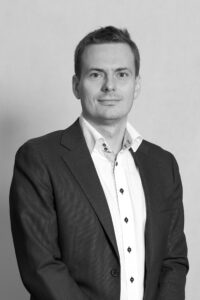
Ondřej Houska is a Czech journalist and historian. In his journalistic work, he focuses primarily on the European Union and Czech European policy. He was a correspondent for Český rozhlas in Brussels and now works for Hospodářské noviny. Together with Michal Půr, he is the co-author of the podcast “Bruselský diktát”. His book “Strůjci apokalypsy” (The Architects of the Apocalypse) was recently published, in which he reflects on who bears the blame for the outbreak of the First World War.
This article was produced as part of the project Foreign Policy of the V4 Countries in a Changing World. The project is co-funded by the governments of the Czech Republic, Hungary, Poland and Slovakia through Visegrad grants from the International Visegrad Fund. The Fund’s mission is to promote the principles of sustainable regional cooperation in Central Europe.
ROČNÍK XV. – 3. ČÍSLO, ZÁŘÍ 2026